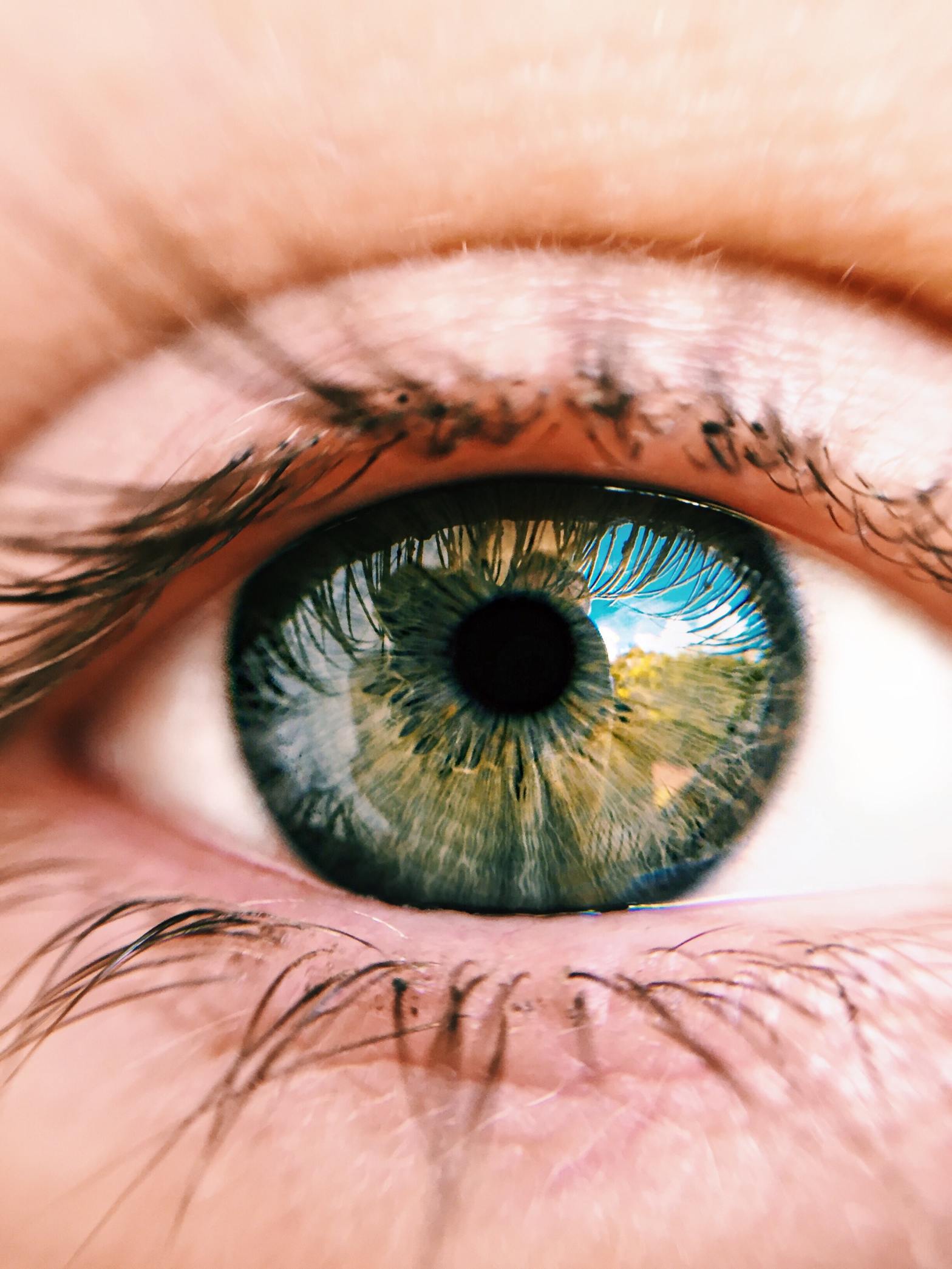
If you are the parent of a young child, your child may have gotten a routine eye exam test at their family doctor’s visit.
Eye exams are routine and they have been occurring for decades. The exam is used to screen for vision abnormalities and impairments. Certain vision impairments such as ambliopia or hyperopia can be detected if the routine test is failed. These conditions are similar, but different. If you have ambliopia, you most likely have hyperopia, but if you have hyperopia, you may not have ambliopia. Ambliopia, or lazy eye, is when one of the eyes lacks the responsiveness of the strong eye, which is classified as a convergence problem (the ability for both eyes to focus on a given target).
Hyperopia is when one or both eyes are far sighted due to a slight deformation of one or both eyes, ie slightly obloid (ovalish) instead of spheroid.
An intense case of hyperopia may result in a case of ambliopia, so the terms frequently become confused or interchanged.
The majority of ambliopia cases develop in children under the age of 6. If your child is 6 or older, it is likely that they will not develop ambliopia later in life.
My son has a case of severe hyperopia, which has been causing concern in his optometrist that he may develop ambliopia if his ambliopia is not treated. She insists that he needs the conventional hyperopia treatments.
The conventional ambliopia treatments are the most commonly prescribed treatments; prescription glasses and routine eye patching of the good eye.
The general objective of these methods is to impair the vision of the good eye in such a way as to “force” the weak eye to strengthen.
I have found these methodologies to be short sighted, negligent, and even dangerous.

The glasses and patch have a devastation impact on my son’s self confidence and impair his hand-eye coordination. Since he has begun treatment I have witness him squinting in strain and frequently tripping and falling. He has also grown more reserved and withdrawn, not his usual buoyant self.
His ophthalmologist has insisted that his hyperopia is so extreme that prescription glasses and patching are the only way to treat his predicted ambliopia, but I know that there is a better, more ethical and engaging way to treat his condition.
Dr. Frederick Brock, a Swedish optometrist invented a device called the Brock String. The Brock String is a seemingly rudimentary device that consists of colored beads and a string. The application is just as simple as it appears. First, the beads are spaced out on the string, and then the end of the string is held up to the patient’s nose. With the string stretched out in front of them, the patient fixes his or her vision on one bead at a time. Focusing the vision on each bead at different distances from the face is a conscious practice to strengthen the convergence of both eyes. The exercise can be performed for 5-10 minutes, preventing eye strain, and repeated a couple to a few times a day.
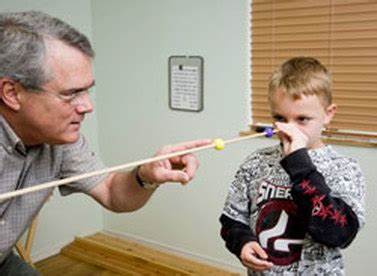
The benefits of this method are ample. The Brock string is easy to replicate and cheap to reproduce. String and colored beads are universally available.
This method is considerably cheaper than prescription glasses and less stressful for children. Children enjoy the engagement that comes from the exercise with an adult and it can be like a fun game for them.

It requires more time and investment to treat with a Brock string, but as there is virtually no risk or long term negative side effects when using a Brock String.
If you are interested in trying Brock String, here is a link to one that I recommend:
Although they may be rigid and unreceptive to this methodology (unless they have a focus in Vision Therapy), I highly recommend working with a lisenced ophthalmologist to monitor your child’s progress with a Brock String.
An ophthalmologist might be belligerent about their preferred prescription preferences, but they cannot deny the concrete results of a passed vision test. Also feel free to ask them about a visagraph test, a test that detects potentially virtually undetectable conditions.
Here is a link to a pediatric eye exam chart which you can use at home:
Best of luck to you, may the health conscious revolution begin!
Post note:

 The Holistic Family